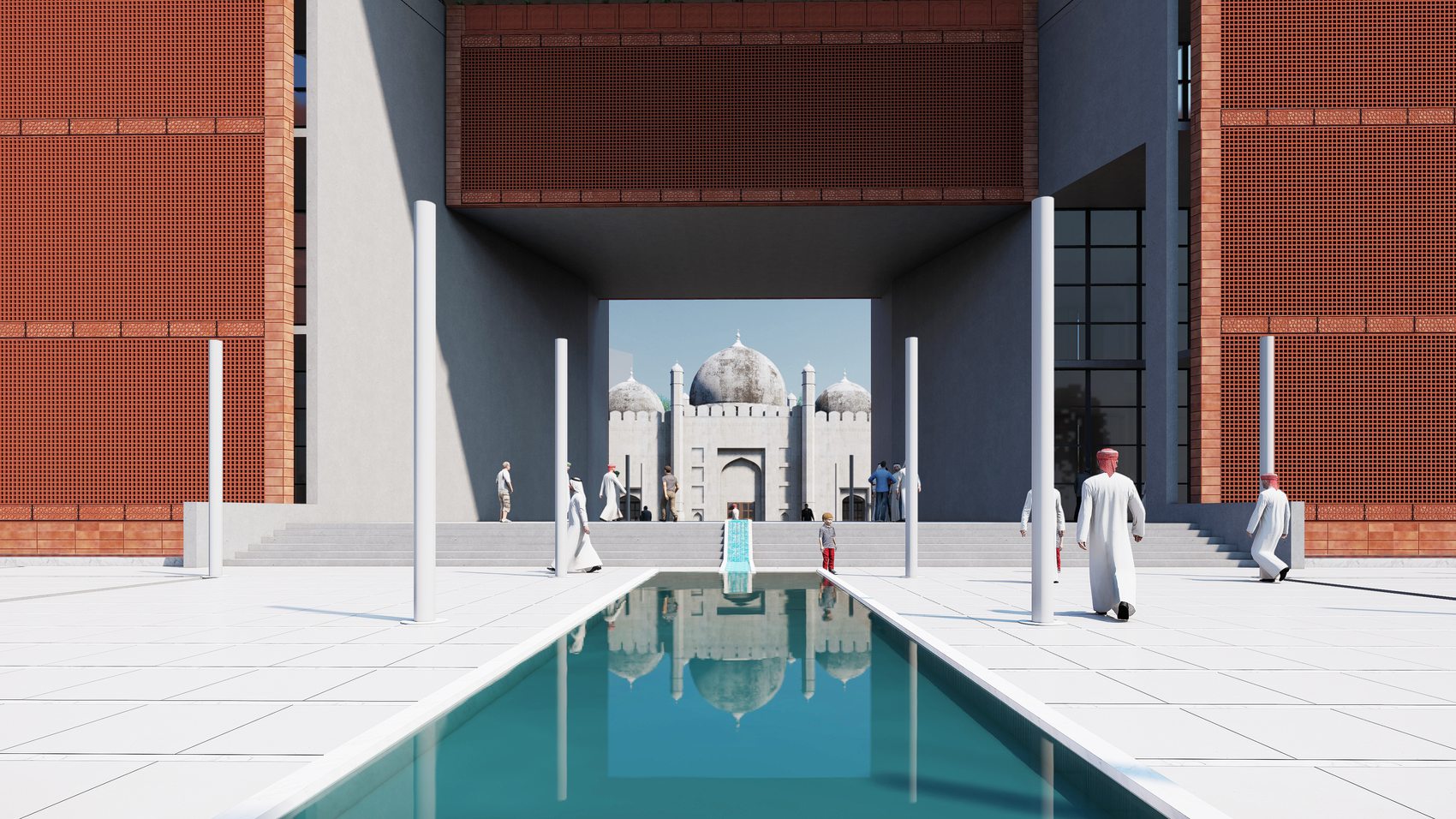
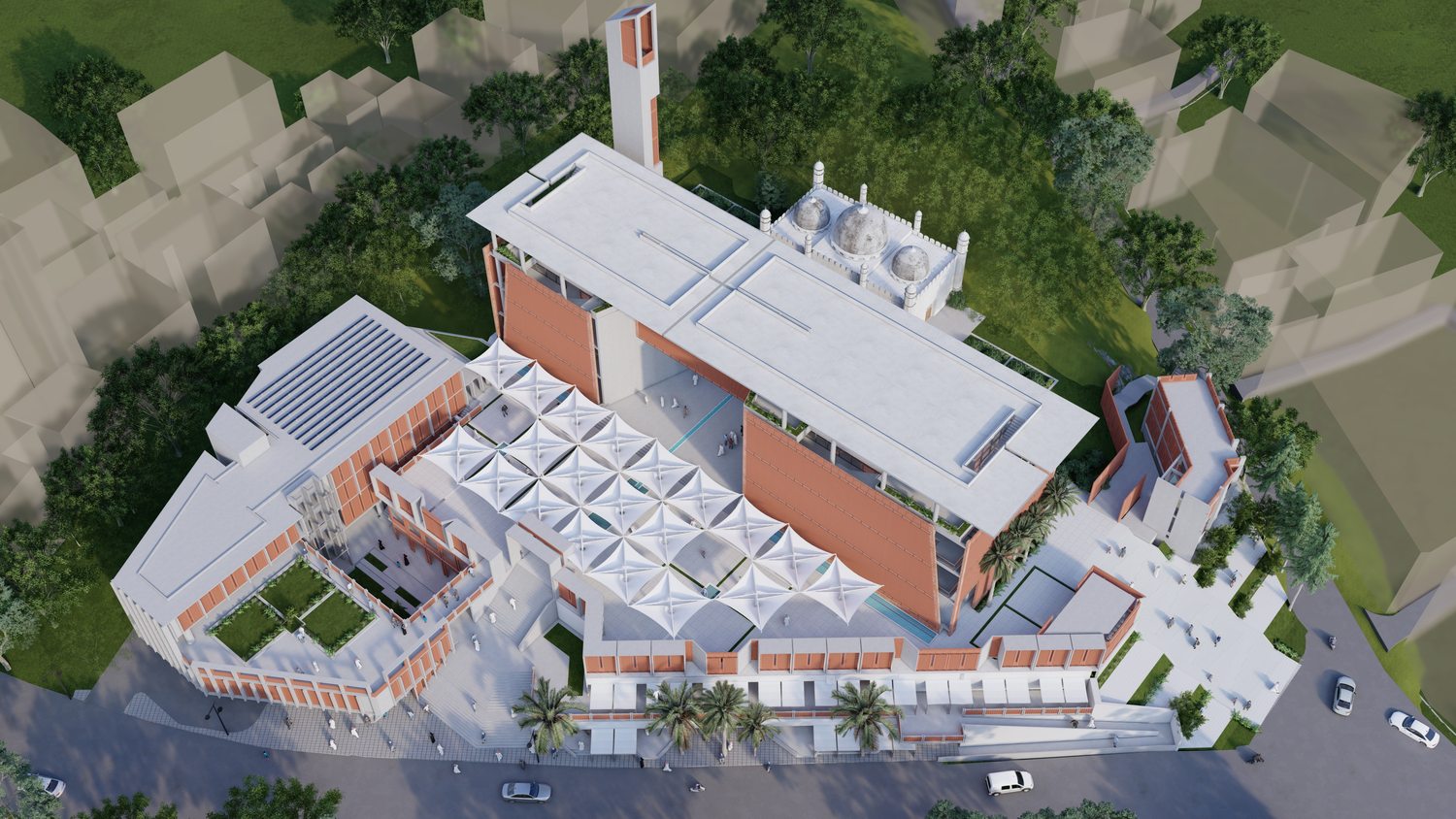
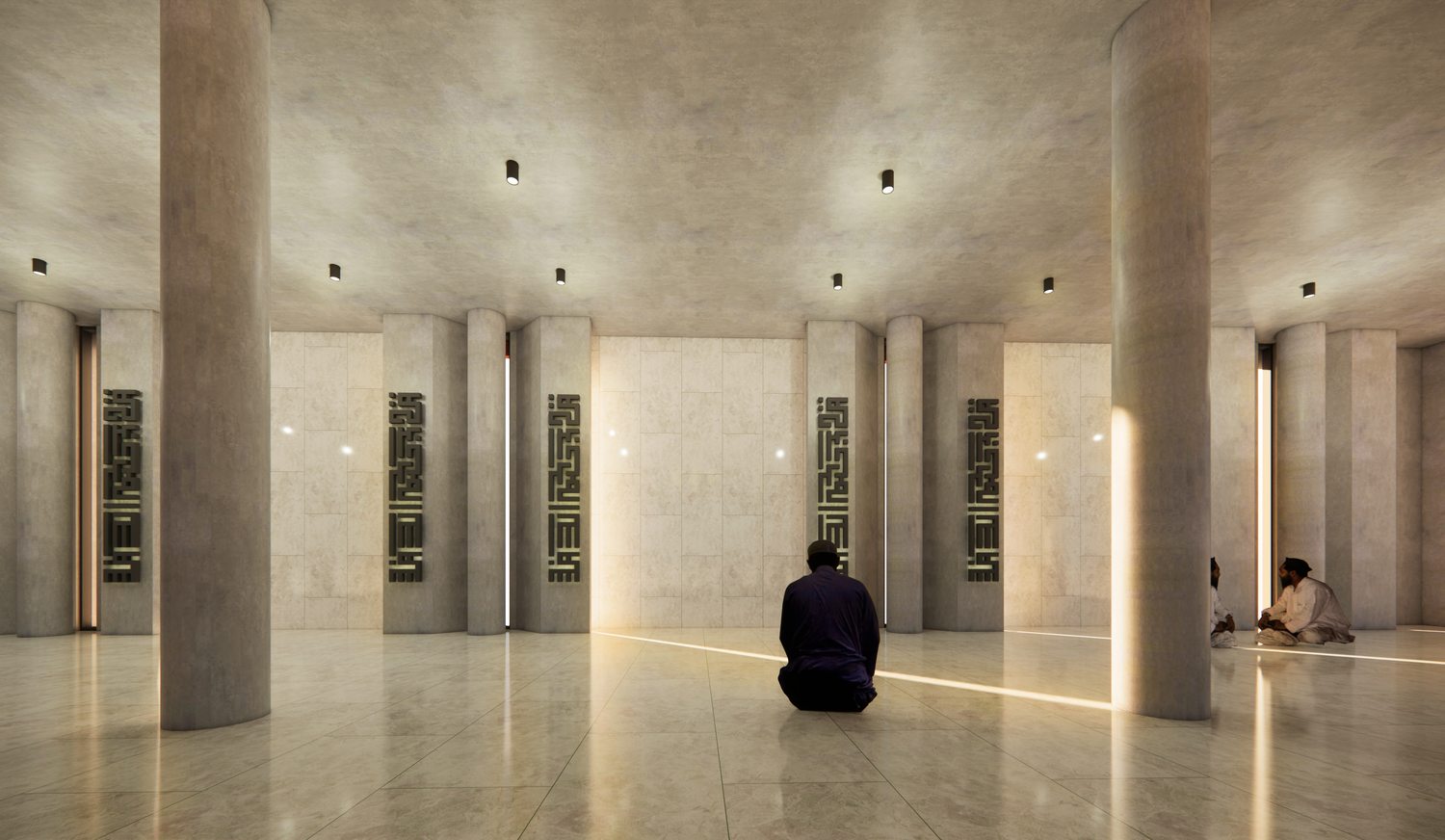
The historic Andarkilla Shahi Mosque had been steadily obscured by newer construction. The design sets out to unveil and revive it, taking light — the central metaphor of Surah Al-Nur, and a symbol of the presence of Allah — as the organising idea. A luminous gateway frames the mosque and restores its prominence within a dense urban fabric, the new structure standing as a contemporary minaret that sharpens the spiritual and architectural identity of the city. Rather than isolating the monument, the scheme knits it into a larger Mughal landscape, so that conservation operates at several scales at once and the mosque remains an essential part of the city’s daily life. Extensive study of Mughal precedent — Humayun’s Tomb, the Taj Mahal, Fatehpur Sikri and the Jami Masjid in Delhi — informed a shared vocabulary of materiality and tectonics, and merging those historic elements with contemporary intervention lets the design carry both the Islamic and the urban cultural identities of Chittagong. Once hidden, the mosque now stands as a beacon of faith and heritage: light and structure intertwined in a timeless architectural narrative.